

Massage therapy uses hands-on techniques to work with the body’s soft tissues, supporting relaxation and helping some people manage pain. It can complement a wellness routine, but its benefits depend on your needs, health, and the approach used. This guide explains the evidence, compares common options, and shows how to make informed choices without expecting massage to replace medical care. (health.nih.gov)
How does massage therapy support wellness?
Massage therapy may support wellness by easing muscle tension, encouraging relaxation, and providing short-term relief for certain pain conditions. It involves manipulating muscles and other soft tissues, with techniques adapted to the person receiving treatment. Research is promising in some areas, but findings vary, and lasting benefits are not guaranteed. (nccih.nih.gov)
A useful starting point is to define what wellness means for you. Perhaps you want an intentional break from a demanding week, or you want help managing discomfort alongside a clinician’s treatment plan. These are different goals, so describe yours rather than simply requesting a “good massage.”
For readers interested in holistic healing, think of massage as one possible part of whole-person care—not a cure-all. A practical approach considers physical comfort, emotional wellbeing, daily habits, and appropriate healthcare together. Choose specific goals you can review rather than relying on broad promises of transformation.
The main benefits and their limits
Relaxation and relief from everyday tension
Massage may help reduce stress and ease muscle stiffness and tension. That makes relaxation a reasonable goal, even when you are not seeking treatment for a diagnosed condition. However, individual responses differ, and more research is needed to understand benefits for particular concerns. (mayoclinic.org)
Consider what would make the experience restful for you. Ask for quiet if conversation feels tiring, mention sensitivity to fragrances, and explain your pressure preferences. You do not need to choose an intense treatment to make the appointment worthwhile.
Treat relaxation as a personal outcome rather than a performance target. Afterward, note whether you felt comfortable, respected, and able to switch off. Those observations can help you decide whether the experience fits your wellness priorities.
Short-term support for pain management
Studies suggest massage may help some people with low-back, neck, or shoulder pain, although evidence is often limited and improvements may be short-lived. Research has not established that one massage style consistently works better than another for low-back pain. Avoid interpreting temporary relief as proof that an underlying problem has been corrected. (nccih.nih.gov)
Make your goal practical: sitting through dinner more comfortably, for example, rather than expecting permanent freedom from pain. Record how you feel before the appointment and during the following days. If symptoms persist or worsen, seek assessment rather than repeatedly booking massage without reviewing the problem. Massage should not delay medical care. (health.nih.gov)
Which massage techniques fit your goals?
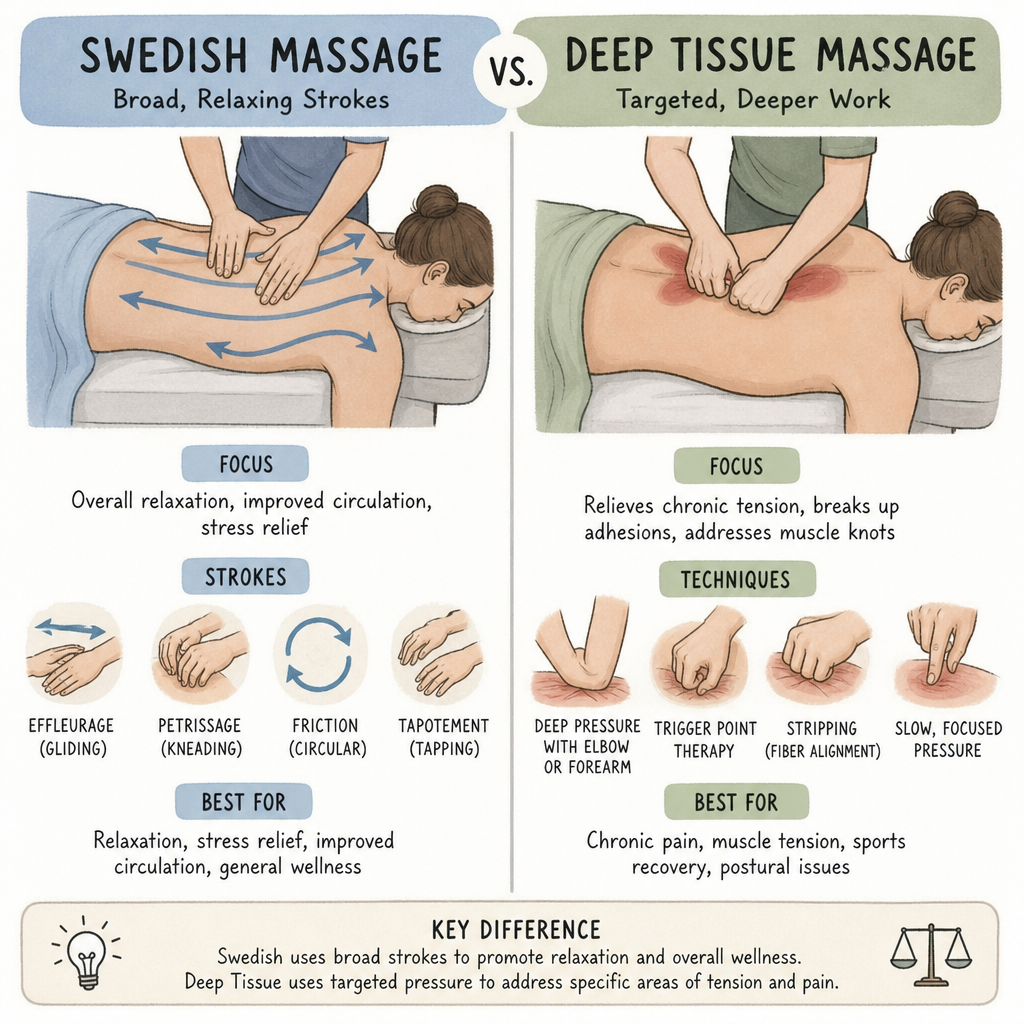
The most suitable massage techniques depend on your goals, comfort preferences, and medical circumstances. Swedish massage generally takes a broader approach, while deep tissue massage focuses more closely on particular areas of concern. Discuss what you want to achieve rather than assuming the strongest pressure will produce the best result. (newsinhealth.nih.gov)
Use these distinctions to guide the conversation:
Swedish massage: Typically includes long strokes, kneading, and other movements across broader areas. Ask about this approach if you prefer a general session rather than concentrated work on one spot.
Deep tissue massage: Targets specific areas of discomfort or restriction. Ask the therapist to explain the planned focus and check that the pressure remains acceptable.
Therapeutic massage: Treat this description as a starting point for questions. Ask which techniques the appointment includes, what goal they address, and how progress will be reviewed. (newsinhealth.nih.gov)
Your feedback matters throughout the session. You should not experience severe pain, and you can request lighter pressure whenever necessary. Some next-day soreness can occur, but suffering through treatment is not a requirement for benefit. (mayoclinic.org)
Lymphoedema massage therapy requires specialist care
Lymphoedema, also spelled lymphedema, involves swelling caused by a buildup of lymph fluid. Cancer or its treatment can disrupt lymph drainage, although an individual needs clinical assessment to determine the cause of swelling. Lymphoedema massage therapy generally refers to manual lymphatic drainage: a gentle, specialized approach intended to help move lymph fluid. (cancer.gov)
This is different from an ordinary relaxation appointment. Manual lymphatic drainage may form part of complete decongestive therapy, alongside compression, exercise, and skin care. The aim is symptom management rather than a cure, and the treatment plan should be coordinated by an appropriately trained professional. (nhs.uk)
If you have diagnosed lymphoedema, ask your care team for a suitable referral. A specialist may teach simpler self-massage techniques for maintenance, but those instructions should be tailored to your circumstances. Do not substitute a generic online massage routine for that guidance. (nhs.uk)
New or unexplained swelling needs medical evaluation before treatment. In particular, sudden swelling on one side should not be approached as a routine wellness concern; clinicians may need to rule out infection, a blood clot, or another cause. (bccancer.bc.ca)
Preparing for a safe, comfortable appointment
Massage generally has a low risk of harm when performed appropriately, but serious injuries have occasionally been reported. Some reports involve vigorous techniques or people with increased vulnerability to injury. Share your health history instead of assuming that a non-drug treatment is automatically suitable. (health.nih.gov)
Check with your healthcare team first if you take blood-thinning medication, have a bleeding disorder, a recent blood clot, broken bones, or severe osteoporosis. Pregnancy and other health circumstances may also require adjustments. Pressure should be avoided over healing wounds and certain other vulnerable areas. (mayoclinic.org)
Before booking, use this checklist:
Confirm relevant training. Ask about credentials and experience with your particular concern, especially if specialist care is needed.
Explain your goal. Say whether you want relaxation, attention to a specific area, or support alongside an existing care plan.
Discuss practical details. Ask about total cost, appointment length, cancellation terms, and any proposed follow-up schedule.
Set your boundaries. Identify areas you do not want touched and discuss clothing, draping, positioning, and pressure preferences.
Agree on communication. Make clear that you will speak up if anything feels uncomfortable and ask how the session can be adjusted. (nccih.nih.gov)
You can keep clothing on or undress only to your comfort level. Tell the therapist about allergies or scent sensitivities if oils or lotions may be used. If positioning is uncomfortable, ask about alternatives rather than trying to tolerate it silently. (mayoclinic.org)
Combining massage with everyday relaxation techniques
Relaxation techniques offer options you can practice between appointments. Examples include breathing exercises, guided imagery, and progressive muscle relaxation, which involves gently tensing and releasing muscle groups. These practices aim to encourage the body’s relaxation response, though evidence for treating specific conditions varies. (nccih.nih.gov)
Choose one manageable practice rather than building an elaborate routine. You might try a brief breathing exercise during a quiet break or use guided imagery before settling down for the evening. Keep the practice comfortable; stop if it increases anxiety or distress, which occasionally happens with relaxation exercises. (nccih.nih.gov)
Place these activities alongside regular movement, nutrition, and social support—not in competition with them. Relaxation practices are complementary tools, not reasons to postpone assessment or abandon prescribed treatment. Persistent anxiety, depression, or other significant symptoms deserve professional care. (nccih.nih.gov)
Building a wellness plan you can evaluate
Start with a clear purpose and a review point. Before committing to repeat appointments, decide what would make massage worth your time and money. Consider keeping a simple note of your comfort, relaxation, daily activities, and any unwanted effects.
Review the experience using three questions:
Was the session appropriate? Consider whether your preferences, boundaries, and health concerns were taken seriously.
Was the benefit meaningful? Distinguish an enjoyable appointment from a useful change in the issue you wanted to address.
Does continuing make sense? Weigh the benefit against cost, convenience, and other parts of your care or wellness routine.
The goal is not to find the most forceful technique or the busiest appointment schedule. It is to choose an approach that fits your needs, respects your comfort, and offers value you can recognize. Keep expectations realistic, communicate openly, and let your own experience guide the next decision.
Book Your Massage with Luméa Massage in Idaho Falls-https://book.squareup.com/appointments/d68ueofdgjp4q9/location/L1607N0DHV8R9/services